 Click to explore ↗
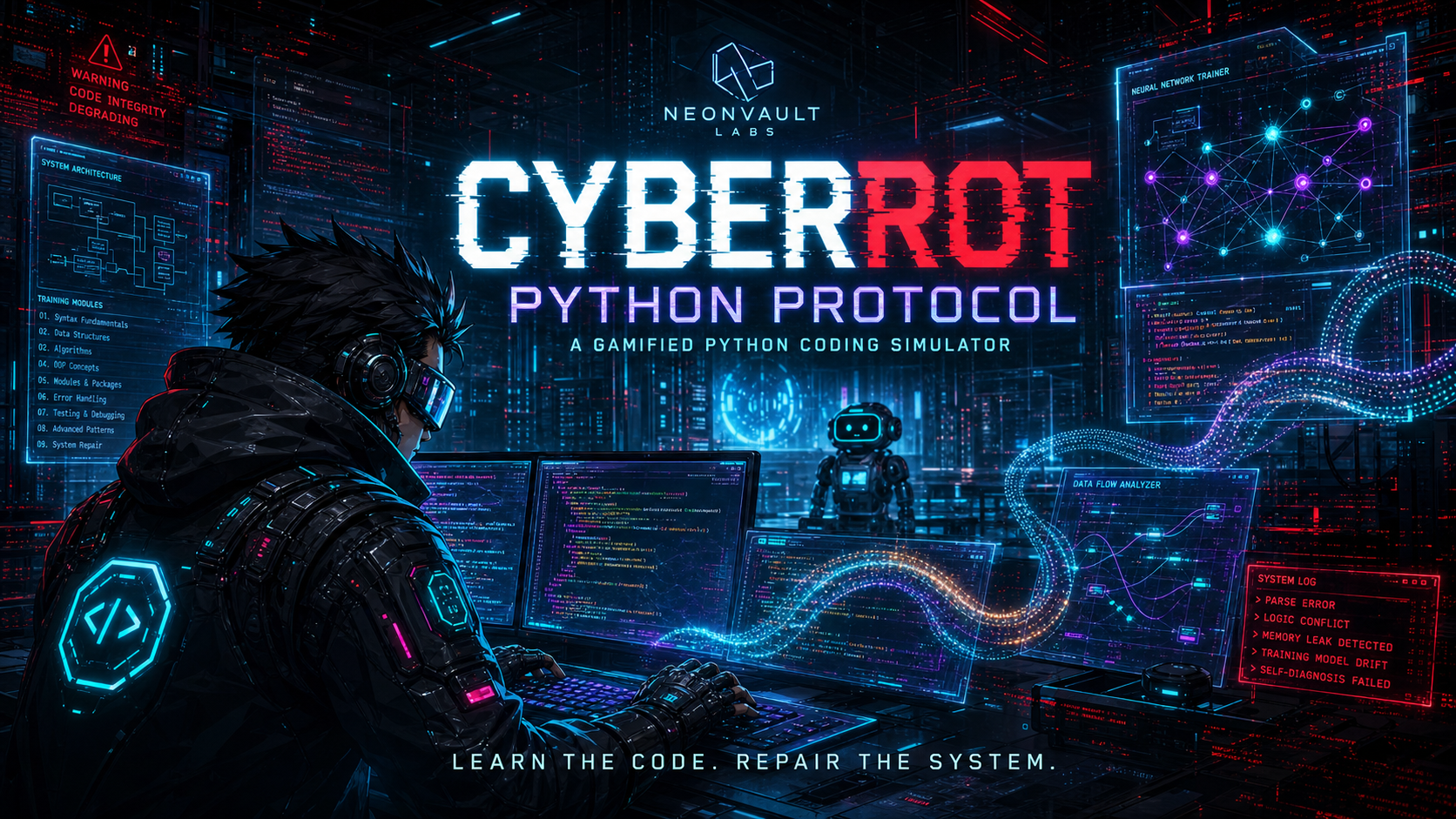
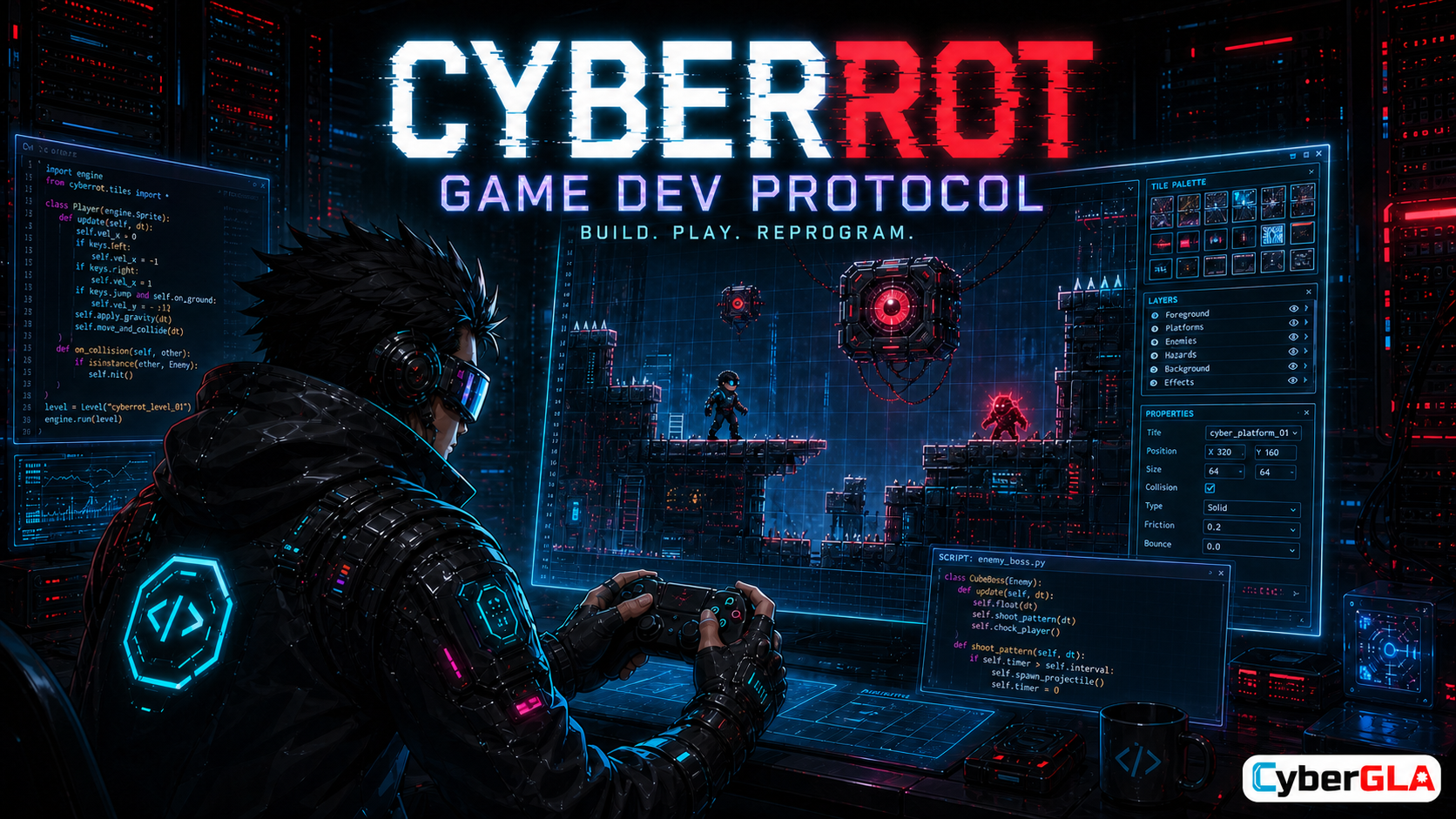
CyberRot
Learn cybersecurity by playing. Spot phishing, spoofing, social engineering, and AI deepfake clues.
Play Free DemoCyberGLA turns cyber awareness and coding fundamentals into active, memorable training for learners, classrooms, schools, teams, and workforce programs.

CyberGLA-style activities have been piloted in college classrooms and refined through student feedback. Learners responded well to interactive simulations because they require repeated judgment, not passive viewing.
Peer-reviewed work connects CyberGLA and EmailKnight to adaptive cybersecurity training for AI-augmented phishing, spoofing, deepfake-enabled attacks, and practical detection skills.
CyberGLA blends traditional instruction with entertaining simulations, giving instructors ready-to-use resources while helping schools and organizations centralize game-based practice and completion activities.
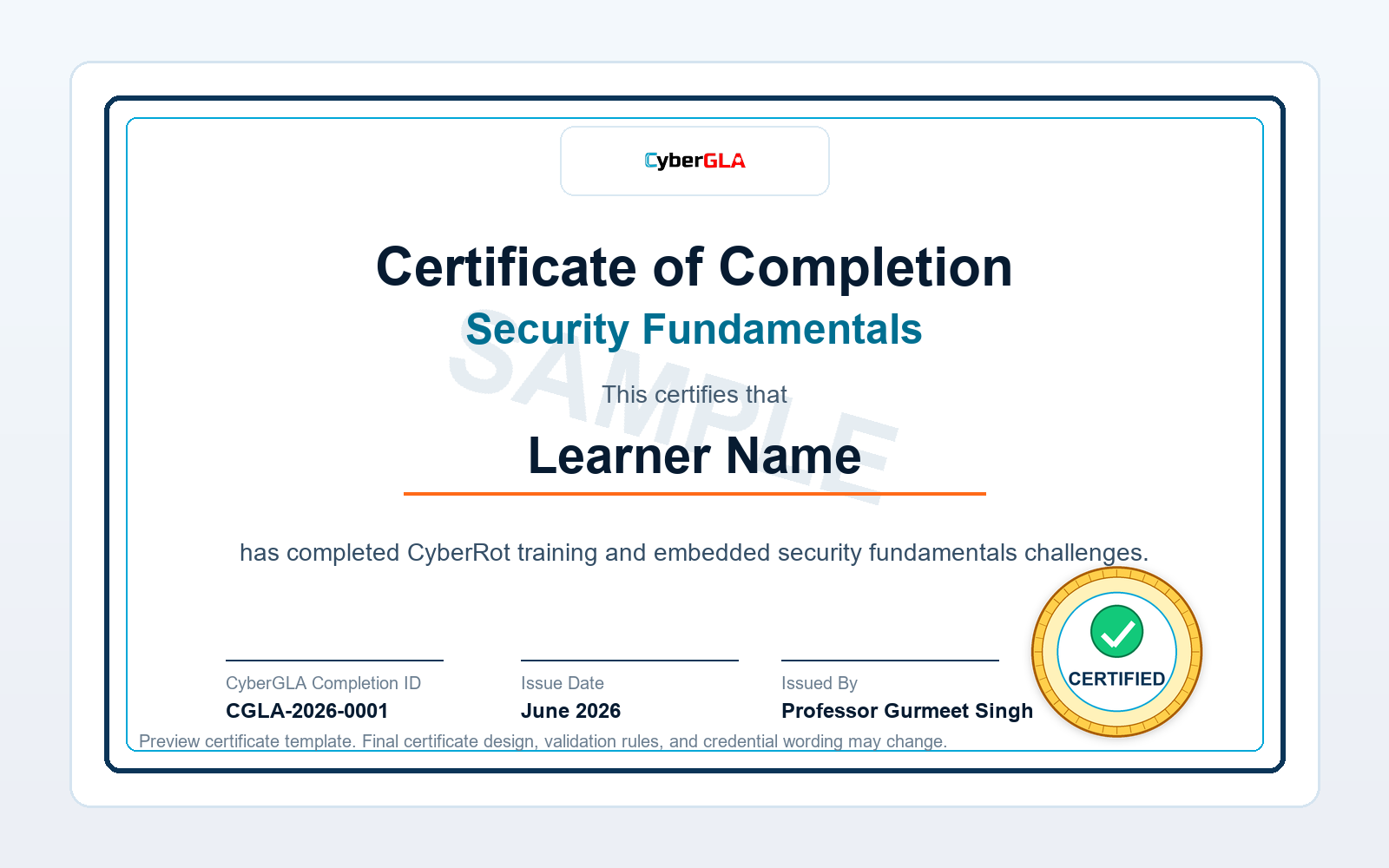
Designed for a simple completion flow: the game is the training. Learners answer embedded questions and gain hands-on practice through simulated challenges. Schools and employers can pair this training with classroom exams and practical assessments to evaluate proficiency.
Integrate CyberGLA into existing college curricula, employee development, and staff training. Where the program permits, instructors can deliver training and assessments locally, reducing reliance on separate services, distant testing locations, and external scheduling. Certificate requirements and assessment arrangements depend on the course and the institution delivering it.

CyberGLA was created by a computer science and cybersecurity educator focused on AI-generated impersonation, phishing detection, gamified learning, and practical computing education.
MS in Computer Science | MBA | Cybersecurity and computer science educator
Explore teaching experience · Read research and publications
Published research and graduate work inform the platform; they do not establish the effectiveness of every current product.
CISSE Journal, Vol. 13 No. 1 (2026) · DOI: 10.53735/cisse.v13i1.230 · Weihao Qu, Gurmeet Singh, Daniel Crawford, Bingjun Li, and Jalen Smith
Examines AI-augmented phishing and a detection-and-training framework involving CyberGLA and EmailKnight.
IEEE CCCI (2024) · DOI: 10.1109/CCCI61916.2024.10736454 · Evan Gardner, Gurmeet Singh, and Weihao Qu
Explores operating-system vulnerabilities, penetration testing, and security hardening.
Master's thesis · Gurmeet Singh
Graduate work examining spoofing, voice cloning, real-time deepfakes, and cybersecurity awareness education.
Ask about game access, school licensing, instructor materials, employee training, or a custom website, software, or digital-content project.
Contact information is used to respond to purchase, licensing, support, or custom training questions. CyberGLA does not sell inquiry information.
CyberGLA simulations, quizzes, and examples are for cybersecurity education and awareness training. They do not guarantee security outcomes and are not instructions to attack real systems.